How To Choose A Lightweight Watering Can For Balcony Containers
A practical step-by-step guide to how to choose a lightweight watering can for balcony containers, including preparation, instructions, common issues, tips, and next steps.
How To Choose A Lightweight Watering Can For Balcony Containers
Choosing a lightweight watering can for balcony containers is about matching the tool to your space, your plants, and your own strength so that watering becomes a calm routine rather than a chore. This guide walks you through practical decisions—capacity, material, spout design, balance, and storage—so you can pick a can that is easy to lift, pour accurately, and store neatly. You will also learn how to test a can before buying, how to maintain it, and how to adapt your choice for different balcony conditions. The goal is a can that feels almost invisible in use: light enough to carry, precise enough to avoid spills, and durable enough to last through many seasons.
Fast Answer
- For most balcony container gardens, a can that holds roughly two to three liters when full is the sweet spot: light enough to lift with one hand and large enough to water several pots without constant refills.
- Choose a can with a long, slender spout and a balanced handle; this combination lets you reach the back of a crowded balcony and pour gently around stems without splashing soil or knocking leaves.
Before You Start
- Measure your balcony space and count your containers, noting how far you must carry water from the nearest tap or filling point to the farthest pot.
- Check your own lifting comfort by holding a similar weight—such as a full bottle—at arm's length for a few seconds to judge what feels safe and easy.
- List the types of plants you grow: seedlings and herbs need a gentle shower, while larger shrubs may need a faster, more directed pour.
- Decide where the can will live when not in use, measuring any shelf, hook, or corner so you choose a size and shape that stores without clutter.
Step-by-Step Instructions
Measure Your Balcony and Watering Route
Start by walking your normal watering route with a tape measure or a simple step count. Note the distance from your water source to the farthest container, and check for tight corners, low railings, or steps that could make carrying a full can awkward. A can that is easy to lift in the kitchen may feel heavy by the time you reach the end of a long balcony. Write down the number of containers and their approximate sizes, because this tells you how many trips a single fill will require. This check matters because a can that is too small means constant refilling, while one that is too large becomes a burden on the journey. Choose a capacity that lets you water most of your pots in one trip without straining. If your route is short and flat, you can lean toward the larger end of the lightweight range; if it is long or narrow, favor a smaller can that you can carry with one hand and still have a free hand for a door or curtain.
Compare Materials for Weight and Durability
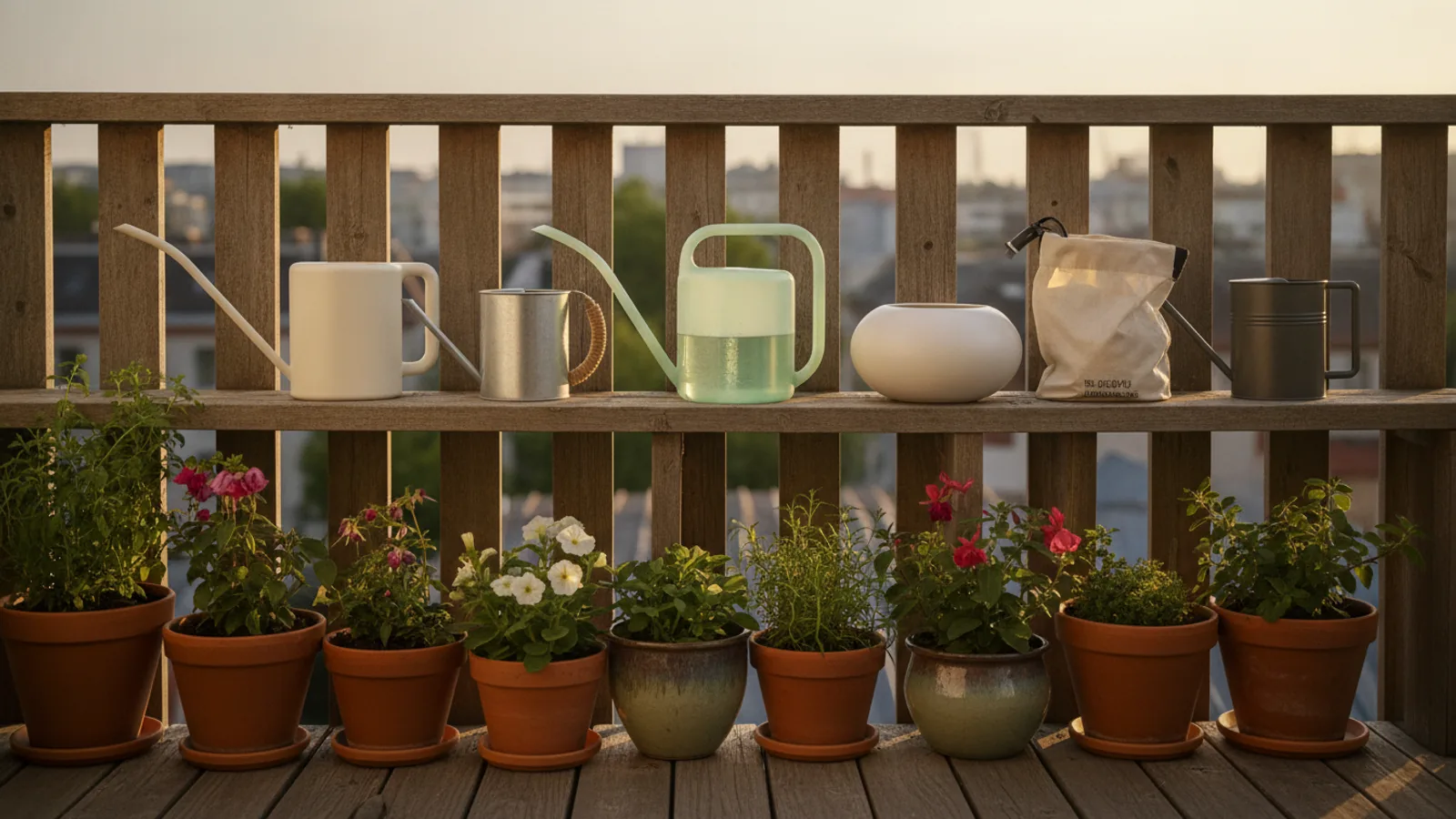
Lightweight watering cans are commonly made from plastic, galvanized metal, or silicone, and each material has a different feel in the hand. Plastic is usually the lightest and most affordable, but thin plastic can crack in strong sun or cold. Galvanized metal is sturdy and classic, yet it is heavier even when empty and can rust if water sits inside. Silicone or rubberized cans are flexible, quiet, and gentle on surfaces, but they may not hold their shape as firmly. Pick up each option in the store or compare the listed empty weight if shopping remotely. A practical check is to squeeze the body gently: if it flexes easily, it may be too thin for daily use. This matters because the can's empty weight adds to every liter you carry, and a can that rusts or cracks will need replacing sooner. For balcony life, a medium-thick plastic or a coated metal can often balances light weight with enough durability to survive sun, wind, and occasional bumps.
Check the Spout and Rose for Pour Control
The spout and rose—the perforated end piece—control how water leaves the can, so they deserve close attention. A long, slender spout reaches over leaves and into the back of a crowded container without forcing you to tilt the can too far. A removable rose with small, evenly spaced holes creates a soft shower for seedlings and herbs, while removing the rose gives a faster stream for larger plants. Test the angle: hold the can as if pouring and see whether the spout points where you need it without your wrist bending awkwardly. Make sure the rose fits securely and can be taken off and rinsed, because clogged holes cause uneven watering. This check matters because poor pour control leads to splashed soil, exposed roots, and water on your balcony floor. A can that pours smoothly and precisely makes watering faster and less messy, and it reduces the chance of overwatering one spot while missing another.
Test the Handle and Balance
A lightweight can is only useful if it feels balanced when full. Fill a candidate can with water to a comfortable level and lift it with one hand. The handle should sit high enough that the can hangs naturally without pressing against your leg, and the weight should feel centered rather than tipping forward. If the can has a second handle near the spout, use it for better control when pouring. Walk a few steps and pretend to water a plant; notice whether your wrist or shoulder tenses. This test matters because balance affects safety and endurance. An unbalanced can forces you to grip harder, which tires your hand quickly and increases the chance of a spill. Look for a handle that is wide enough for your fingers, with a smooth surface that does not dig in. If the can feels awkward even when half full, try a smaller size or a different handle shape before deciding.
Plan for Storage and Seasonal Use
Before you commit, decide where the can will live when it is not in use. Balconies often have limited floor space, so measure any shelf, hook, or corner where the can can sit without blocking a door or getting in the way. A can with a narrow profile or a hanging loop may store more easily than a wide, round one. Consider the seasons: if your balcony freezes, a can left full of water can crack, so you need a place to empty and store it or a material that tolerates cold. If your balcony gets intense sun, dark plastic may fade or become brittle, while a lighter color stays cooler. This planning matters because a can that is hard to store often gets left outside, where it collects debris, grows algae, or becomes a hazard. Choose a can that fits your storage spot and your climate, and decide now how you will empty it after each use.
Do a Final Pour Test and Maintenance Check
Once you have a can in mind, do a full pour test before it becomes part of your routine. Fill it to your normal working level, then water a few containers, including one that is hard to reach. Watch for drips from the spout joint, a loose rose, or a handle that shifts under weight. After pouring, empty the can completely and set it upside down to drain. Check any seams or joints for leaks, and make sure the rose can be removed and rinsed. This matters because small leaks waste water, create slippery spots, and can stain your balcony surface. A quick maintenance check also tells you whether the can will stay pleasant to use over time. If you find a drip, tighten or adjust the part, or return the can and try another. A can that passes this test will be reliable, easy to clean, and ready for many seasons of balcony watering.
Quick Reference
| Situation | Action | Why it helps |
|---|---|---|
| Your balcony is long and the water source is far away. | Choose a can that holds about two liters when full and has a comfortable one-hand handle, then fill it only halfway for the walk and top it up near the plants if needed. | A smaller working load reduces arm and wrist strain on a long route, and topping up near the plants avoids carrying the full weight the entire distance. |
| You grow seedlings and delicate herbs in small pots. | Pick a can with a removable fine rose and a slender spout, and pour slowly with the rose attached so water falls like a soft shower rather than a stream. | A fine rose spreads water gently, which prevents soil from splashing out and keeps tiny stems from being knocked over by a heavy flow. |
| Your balcony freezes in winter or gets very hot in summer. | Select a can in a light color with a material that tolerates temperature swings, and store it empty and upside down in a sheltered spot when not in use. | Light colors stay cooler in sun, and emptying the can prevents cracked seams from freezing water while also reducing algae growth in warm weather. |
Common Issues
- The can feels too heavy even when it is only partly full.: Reduce your working capacity by filling the can only to a level you can lift with one hand, and consider a smaller can or a lighter material. If the handle is uncomfortable, add a padded grip or choose a model with a wider, smoother handle. The goal is a can you can carry without tensing your shoulder or wrist.
- Water splashes out of the spout or misses the pot.: Check that the rose is attached correctly and that its holes are clear. Pour more slowly and keep the spout close to the soil surface. If the spout is short, try a can with a longer spout so you can reach the back of the container without tilting the can too far and causing a sudden rush of water.
- The can leaks from a seam or the spout joint after a few uses.: Empty the can and inspect the seam or joint for cracks or a loose fitting. Tighten any removable parts, and if the leak continues, stop using the can for indoor or balcony watering because dripping water creates slippery surfaces. A replacement can with a one-piece body or stronger seals will be more reliable.
Advanced Tips
- Weigh your filled can on a kitchen scale once to learn exactly what your normal working load feels like, then use that number to judge whether a new can is truly lighter or just differently shaped.
- Mark your can with a small line at your preferred fill level using a waterproof marker or a piece of tape; this visual cue helps you stop before the can becomes too heavy to carry comfortably.
- Keep a second, very small can or a measuring cup near your pots for quick touch-ups; this reduces the number of times you carry the main can and keeps watering gentle for seedlings.
Final Checklist
- Measure your watering route and container count, then choose a capacity you can carry with one hand for most of the trip.
- Test the handle and balance with water inside, and make sure the spout and rose give you gentle, accurate pour control.
- Confirm the can fits your storage spot and that you can empty and dry it after each use, especially in freezing or very hot conditions.
- Do a final pour test for leaks, loose parts, or an uncomfortable grip before making the can part of your daily balcony routine.
FAQ
What size watering can is best for a small balcony?
For a small balcony with a handful of containers, a can that holds about two liters when full is usually the most comfortable. It is light enough to lift with one hand and large enough to water several pots before you need a refill. If your route to the water source is long, choose the smaller end of that range or fill it only halfway. The best size is the one you can carry without strain and pour with steady control, so test a few capacities with water before deciding.
Should I choose plastic or metal for a lightweight can?
Plastic is often lighter and less expensive, but thin plastic can crack in strong sun or cold. Metal is sturdier and holds its shape, yet it is heavier even when empty and can rust if water sits inside. A medium-thick plastic can or a coated metal can may offer a good balance for balcony use. Pick up each option and consider how it feels when full, because empty weight adds to every liter you carry. Also think about your climate and whether the can will be stored outdoors.
How do I keep my watering can clean and ready to use?
After each use, empty the can completely and rinse the inside with clean water. Turn it upside down to drain and let it air dry, which prevents algae, mineral buildup, and odors. Remove the rose and rinse its holes so water flows evenly next time. If you notice a leak or a loose handle, fix it or replace the can before the next watering session. Storing the can in a shaded, sheltered spot when not in use will also help it last longer and stay pleasant to handle.