How To Compare Outdoor Rug Materials And Care Instructions
A practical step-by-step guide to how to compare outdoor rug materials and care instructions, including preparation, instructions, common issues, tips, and next steps.
How To Compare Outdoor Rug Materials And Care Instructions
Outdoor rugs must handle sun, rain, dirt, and heavy foot traffic, so material choice and care routines work together. This guide explains how to compare common outdoor rug materials—such as polypropylene, polyester, PET, nylon, acrylic, and natural fibers—against your climate, usage, and cleaning preferences. You will learn a practical comparison method, a simple care plan, and how to spot problems early. By matching material traits to real conditions and following consistent maintenance, you can choose a rug that looks good and lasts longer with less effort.
Fast Answer
- Compare materials by water resistance, UV fade resistance, mold risk, softness, weight, and ease of cleaning, then match those traits to your climate and how you use the space.
- Care for most outdoor rugs with regular sweeping, quick spill cleanup, gentle soap and water washing, thorough drying, and seasonal deep cleaning; always check the manufacturer’s care label for specific limits.
Before You Start
- Measure your outdoor area and note sun exposure, rain frequency, and foot traffic level, because these conditions determine which material traits matter most.
- List your priorities, such as easy hose cleaning, soft feel underfoot, low maintenance, or natural look, so you can weigh trade-offs honestly.
- Gather a broom, vacuum with a brush attachment, mild dish soap, a soft-bristle brush, a hose or buckets, and a drying rack or clothesline.
- Check the manufacturer’s care tag or product page for the exact material blend, cleaning limits, and drying recommendations before you buy or wash.
Step-by-Step Instructions
Assess the environment and use
Start by describing the exact spot where the rug will live. Note how many hours of direct sun it receives, whether rain stands or drains quickly, and whether the surface below stays damp. Check foot traffic: a busy patio door needs a tougher material than a quiet balcony corner. Also think about nearby trees, grills, or pet areas, because sap, grease, and accidents affect cleaning needs. Write these observations down. Next, rank your top three needs: fade resistance, water tolerance, softness, or easy washing. This order matters because no single material excels at everything. For example, a rug in full sun and frequent rain may need strong UV and moisture resistance, while a shaded, covered area can prioritize comfort. Finally, measure the space and confirm the rug size you need, since a proper fit prevents curling edges and tripping. This assessment becomes your comparison checklist, so every material you review is judged against real conditions rather than vague preferences.
Identify and compare material traits
Read the material label or product description and list the main fiber type. Common outdoor rug materials include polypropylene, polyester, PET (often made from recycled bottles), nylon, acrylic, and natural fibers like jute or bamboo. For each candidate, compare these traits: water resistance, UV fade resistance, mold and mildew risk, softness, weight, and cleaning ease. Polypropylene usually resists water and mildew well and is easy to hose down, but it can feel rougher. Polyester tends to be softer and fade-resistant but may hold more water. PET is similar to polyester and often recycled. Nylon is durable and soft but can fade in strong sun. Acrylic resists fading and feels like wool but may be less mold-resistant. Natural fibers look warm but often need cover and dry quickly. Create a simple table with one row per material and one column per trait, then mark each cell as strong, average, or weak. This side-by-side view makes trade-offs obvious and keeps you from choosing based on look alone.
Match material to climate and placement
Now connect your material table to your environment assessment. If your area gets heavy rain or high humidity, prioritize water resistance and quick drying, which points toward polypropylene or PET and away from thick natural fibers. If the rug sits in strong, all-day sun, look for strong UV resistance, such as solution-dyed polypropylene or acrylic, because fading is the main long-term enemy. For covered patios with light traffic, you can choose softer polyester or nylon for comfort. If the rug will be near a pool, choose a material that tolerates chlorine and dries fast, and avoid fibers that stay soggy. For high-traffic zones, pick a denser weave and a darker or patterned design that hides dirt. Also consider weight: a heavier rug stays put in wind but is harder to move for cleaning. Check whether the rug can be reversed or rotated to balance wear. Write a final shortlist of two or three materials that pass your must-have conditions, then compare only those for cost and style, since price and availability change over time and should be verified at the point of purchase.
Build a routine care plan
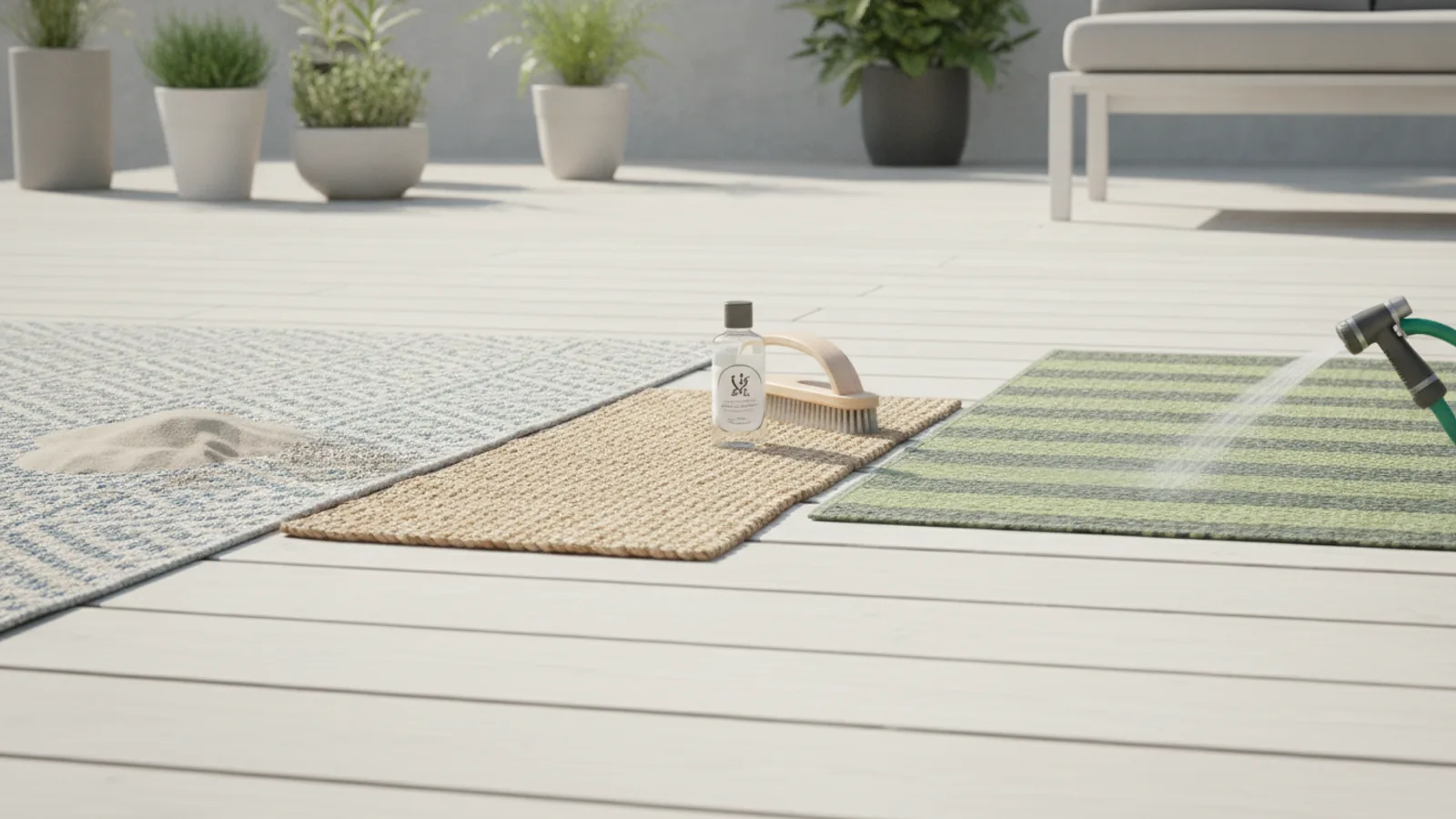
Create a simple schedule that fits your climate and traffic. At least once a week, sweep or vacuum the rug with a brush attachment to remove grit, which acts like sandpaper and wears fibers. Immediately blot spills with a clean cloth, working from the outside toward the center to prevent spreading. For general cleaning, mix a small amount of mild dish soap with cool water, scrub gently with a soft-bristle brush, then rinse thoroughly with a hose until no suds remain. Avoid soaking the backing. Every one to two months, or more often in rainy seasons, do a deeper wash and allow the rug to dry completely on both sides. Lift the rug to check the floor beneath for trapped moisture. Rotate the rug every few months so sun and foot traffic wear it evenly. If the care label allows machine washing, follow its temperature and cycle settings exactly, and never put a rubber-backed rug in a dryer unless the label says it is safe. Record these tasks in a calendar so they become habits rather than occasional efforts.
Handle stains and weather events
Different stains need different first responses, so act quickly and test any cleaner on a hidden corner first. For mud, let it dry, then brush off the solid bits before washing. For grease or oil, blot with a paper towel, then apply a small amount of mild soap and warm water, and rinse well. For pet accidents, clean immediately with an enzyme cleaner labeled for outdoor use, then rinse and dry fully. For mildew, mix a diluted gentle cleaner according to the label, scrub the affected area, and dry the rug in direct sun if the material can tolerate it. After a storm, unroll or lift the rug so air can reach both sides, and remove standing water from the surface. If the rug becomes soaked, dry it off the ground on a rack or railing rather than leaving it on a damp patio. Check the backing for delamination or a musty smell, which signals trapped moisture. When in doubt about a cleaner or method, follow the manufacturer’s instructions rather than experimenting, because the wrong product can set a stain or damage the weave.
Store, rotate, and inspect seasonally
At the end of a season, or before long periods of disuse, clean the rug thoroughly and let it dry completely on both sides. Roll it rather than folding, because folds create creases that can crack fibers over time. Store the rolled rug in a dry, breathable cover or a well-ventilated area, and avoid sealed plastic bags that trap moisture. If you keep the rug outside year-round, inspect it monthly for loose threads, frayed edges, fading, and thinning spots. Rotate it a half turn so one area does not take all the sun and foot traffic. Check under the rug for mold, moisture, or insects, especially after rainy weeks. If you see early mildew, clean and dry it immediately. Also review your care plan against the seasons: increase cleaning frequency in pollen season or after storms, and reduce it in dry, mild weather. Finally, recheck the care label each year, because some manufacturers update recommendations, and verify any product-specific guidance in your own account or documentation before using a new cleaner or method.
Quick Reference
| Situation | Action | Why it helps |
|---|---|---|
| The rug sits in full sun and fades within one season. | Choose a solution-dyed polypropylene or acrylic rug, rotate it every few months, and confirm the care label lists UV resistance before buying. | Solution-dyed fibers hold color throughout the strand rather than only on the surface, so they resist fading longer under strong sunlight. |
| The rug stays damp and develops a musty smell after rain. | Lift the rug off the ground, dry both sides on a rack, clean with mild soap and water, and ensure the area drains well before putting it back. | Trapped moisture between the rug and a hard surface creates the damp conditions where mold and mildew grow fastest. |
| You need a rug for a busy patio with pets and kids. | Pick a dense, low-pile polypropylene or PET rug with a durable backing, vacuum weekly, and blot spills immediately with mild soap and water. | Low-pile, water-resistant fibers release dirt and moisture more easily, which keeps the rug cleaner under heavy daily use. |
Common Issues
- Edges curl upward and become a tripping hazard.: Flip the rug and roll it in the opposite direction, then place heavy books on the corners for a day. For a lasting fix, use outdoor rug tape or a pad, and confirm the tape is safe for your surface. If curling persists, check whether the rug is too small for the area or was stored folded.
- Mildew spots appear after a rainy week.: Mix mild soap with cool water, scrub gently with a soft brush, and rinse thoroughly. Dry the rug completely in direct sun or a well-ventilated area, lifting both sides. If the smell remains, use an outdoor-safe mildew cleaner according to its label and consult the rug’s care instructions before treating again.
- The rug slides on smooth concrete or decking.: Add an outdoor-rated rug pad or apply rug tape to the corners and edges. Clean the surface first so the tape bonds well. Check that the pad does not trap water, and lift the rug after rain to let the floor dry. Avoid pads that crumble or hold moisture, as they can damage both the rug and the surface.
Advanced Tips
- Test any new cleaner on a hidden corner and wait a full day before treating the whole rug, because some products damage dye or backing slowly.
- Use a leaf blower on a low setting to clear dry debris from a large rug quickly, then follow with a broom for a deeper clean.
- Rotate the rug a half turn every few months and flip it if the design allows, so sun exposure and foot traffic wear it evenly.
Final Checklist
- Confirm the material, backing, and care label match your climate, sun exposure, and traffic level before you buy.
- Set a weekly sweeping or vacuuming routine and keep mild soap, a soft brush, and absorbent cloths nearby for spills.
- Dry the rug completely on both sides after washing or heavy rain, and lift it to check for moisture underneath.
- Inspect monthly for fading, fraying, mildew, or curling, and rotate or store the rug properly between seasons.
FAQ
Can I leave an outdoor rug outside all year?
Many outdoor rugs can stay outside year-round if the material resists water, mold, and UV fade, but performance depends on your climate and the specific product. In freezing, snowy, or very rainy conditions, roll and store the rug in a dry, ventilated place during the harshest months. Always check the manufacturer’s care label for storage and temperature guidance, and inspect the rug monthly for moisture, mildew, or wear.
How do I clean an outdoor rug without a hose?
Fill two buckets with cool water, add a small amount of mild dish soap to one, and scrub the rug with a soft-bristle brush using the soapy water. Wipe away suds with a clean, damp cloth, then rinse the cloth often and wipe again with plain water. Press out excess moisture with a dry towel and let the rug air-dry completely on both sides. For heavy dirt, follow the care label or use a vacuum with a brush attachment first.
What is the best way to dry an outdoor rug?
Lay the rug flat or drape it over a railing, rack, or clothesline so air reaches both sides. Choose a sunny, breezy spot when the material can tolerate direct sun, and flip the rug after a few hours. Avoid hanging a heavy, soaked rug by one edge, because the weight can stretch or distort the weave. Never fold a damp rug for storage, and do not put it back on a damp surface until it is fully dry to the touch on both sides.