How To Arrange A Sitting Room For Conversation With Visiting Friends
A practical step-by-step guide to how to arrange a sitting room for conversation with visiting friends, including preparation, instructions, common issues, tips, and next steps.
How To Arrange A Sitting Room For Conversation With Visiting Friends
Arranging a sitting room for conversation with visiting friends means setting up comfortable, face-to-face seating that makes talking easy and relaxed. You will learn how to plan the layout, choose the right furniture, control noise and light, and add small touches that help everyone feel welcome and included, so your guests can enjoy each other's company without strain.
Fast Answer
- Create a conversation circle by pulling chairs and sofa away from walls and facing them toward each other, with no more than one or two empty seats between people.
- Remove distractions like a loud television, harsh overhead light, or a coffee table that blocks knee space, and add soft lighting plus a few side tables for drinks.
Before You Start
- Measure the room and sketch a rough floor plan on paper so you can test seating arrangements before moving heavy furniture around.
- Clear the floor of clutter, pet toys, and charging cables that could trip someone or make the room feel cramped and unwelcoming.
- Set out coasters, small side tables, and a tray for drinks so guests have a natural place to rest a cup without interrupting the conversation.
- Adjust the thermostat and open a window briefly to freshen the air, because a room that is too warm or stuffy makes people tired and less talkative.
Step-by-Step Instructions
Clear the room and define the talk zone
Begin by removing anything that is not needed for sitting and talking: piles of mail, laundry, unused exercise gear, or a large plant that blocks sight lines. Walk through the room and imagine a circle about two to three meters wide in the center. That open space becomes your conversation zone. Move the sofa, armchairs, and side tables so their front edges point toward that circle. A practical check is to sit in each seat and see whether you can look at every other seat without twisting your neck more than a little. This check matters because if one person must turn constantly, they will soon stop talking or leave early. Keep at least one clear path from the door to the circle so latecomers can join without climbing over legs. If the room is small, use lighter chairs that you can angle inward rather than forcing a heavy sofa into an awkward spot. The goal is a friendly cluster, not a formal row.
Position seats for easy eye contact
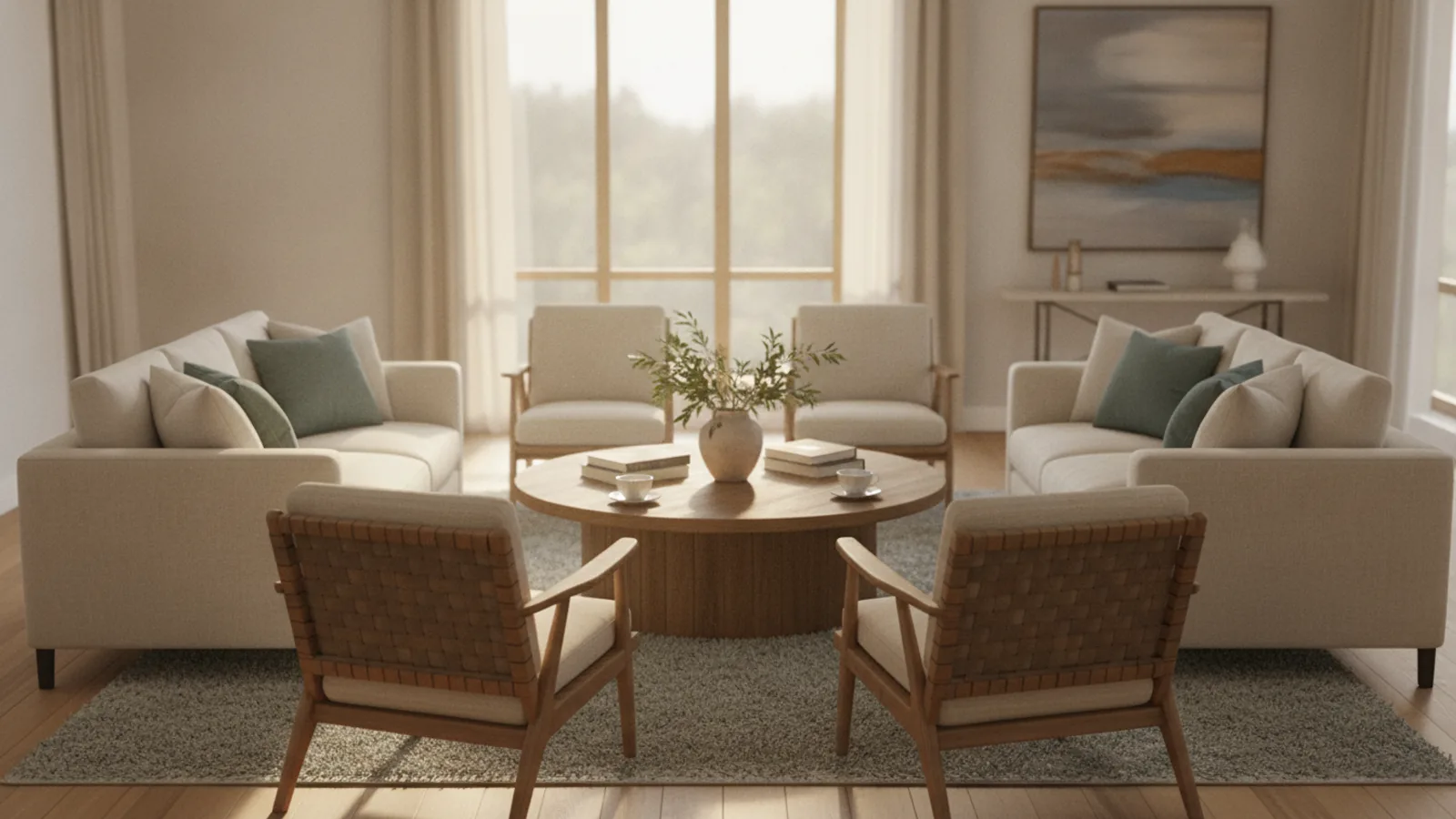
Arrange chairs and sofa so that people face each other at slight angles, not straight opposite, which can feel like an interview. A gentle curve works well: put the sofa on one side, two armchairs on the opposite side angled inward, and one or two lightweight chairs at the ends to close the circle. Leave no more than one empty seat between guests if possible. Check the distance between seats: about one to one and a half meters apart is close enough for easy hearing but far enough to avoid knee bumps. Sit in each spot and confirm you can see the faces of at least three other people. This check matters because conversation flows when people can read expressions and lip movements, especially in a group with mixed hearing abilities. If someone uses a wheelchair or walker, remove a chair to create a open space beside the circle so they can join without being separated. Finally, make sure no seat is so low that a guest must struggle to stand up.
Choose supportive and movable furniture
Select seating that lets people sit comfortably for at least an hour. Deep, soft sofas may look inviting but can be hard to rise from, especially for older guests. A firm seat with a back that supports the lower spine is better. If you have a mix, put the most supportive chairs closest to the circle and save the very soft sofa for younger guests who can bounce up easily. Test each seat yourself: sit down, then stand up without using your arms. If you cannot, that seat may be a poor choice for a long talk. This check matters because discomfort makes people shift, check the time, and cut the visit short. Also, light chairs are easier to move when you need to open a path or add a seat. Keep a folding chair nearby but out of the circle so you can welcome an extra guest without a rush. Avoid seats with wheels that roll away when someone leans forward.
Tune light, sound, and temperature
Lighting should be soft and layered, not a single bright ceiling fixture that creates glare or shadows on faces. Use a floor lamp or table lamp with a warm bulb placed behind or beside each main seat so light falls on faces without shining into eyes. If you have a dimmer, set it low. Close curtains or blinds if outside light is harsh, but keep some natural light if possible. For sound, turn off the television, radio, or any device that plays background music with words, because competing speech is tiring. If the room echoes, add a rug, curtains, or a soft throw on the sofa to absorb sound. Check the temperature: most people are comfortable when the room is neither hot nor cold. A thermometer can help, but ask a guest if they feel a draft. This check matters because poor light, noise, or temperature will make even good friends want to leave early. A small fan on low can move air without noise.
Add practical surfaces and remove blockers
Place small side tables or a narrow console within arm's reach of each seat. You want a stable spot for a cup, a plate, or a phone without anyone leaning forward and interrupting the flow. A low coffee table can work, but make sure it does not force guests to sit with their knees pressed against it. The ideal table height is close to the seat height, so a person can set down a drink without bending far. Check that every guest has a place for their drink by sitting in each chair and reaching for an imaginary cup; if you must stretch or twist, move the table closer or add a small folding tray. This check matters because a guest holding a cup for a long time will either spill it or leave to find a surface. Remove large centerpieces, tall plants, or stacks of books that block the view across the circle. Keep a coaster or a small tray on each table to protect surfaces.
Welcome guests and adjust on the fly
When friends arrive, greet them at the door and walk them into the room without a long delay. Show them where to sit by gesturing to the circle and saying something like, please take any seat. If someone seems unsure, guide them to a chair that matches their needs, such as one with arms if they have trouble standing. After everyone is seated, check the group: can each person see and hear the others? If not, ask, would it help if we moved this chair? Then adjust. This check matters because the best plan still needs a small fix once real people are in the room. Keep your own seat near the edge of the circle so you can get up for drinks or snacks without stepping over guests. If a conversation splits into two, let it happen naturally, but do not let one person be left out. Offer a drink or a small snack to give everyone a shared focus. Stay relaxed, and your guests will too.
Quick Reference
| Situation | Action | Why it helps |
|---|---|---|
| The room feels stiff and guests are sitting in a straight row. | Ask everyone to stand for a moment, then pull two chairs forward and angle them inward so the group forms a rough circle rather than a line. | A circular shape lets people see each other without turning their whole body, which lowers the effort of talking and helps quieter guests join in. |
| One guest keeps leaning forward and cupping a hand behind an ear. | Quietly move that guest to a chair closer to the center of the circle and turn off any background music or television that is still on. | Distance and competing sound are the two most common causes of missed words, and a simple seat change often solves the problem without drawing attention. |
| People are holding empty cups because there is no place to set them down. | Bring over one or two small side tables or folding trays and place them between seats so every guest can reach a flat surface without standing up. | When guests have to balance a cup on their knee or the floor, they stop gesturing and pay less attention to the conversation, which shortens the visit. |
Common Issues
- The sofa and chairs are too far apart, so people shout across the room.: Measure the gap between the two farthest seats. If it is more than about two meters, pull the furniture inward until the distance shrinks. You can also add a lightweight chair at each end to close the circle. Test by sitting in one spot and asking a friend to sit in the opposite spot and speak in a normal voice. If you must strain to hear, the circle is too wide. Keep adjusting until conversation feels easy.
- A large coffee table blocks knee space and makes sitting uncomfortable.: Replace the coffee table with two or three small side tables placed between seats instead of in front of them. If you must keep the coffee table, push it to one side of the circle so it serves as a surface for drinks but does not sit directly in front of anyone's legs. Sit in each chair and check that your knees have at least a hand's width of free space. If not, move the table further away or choose a lower, narrower table.
- The room is too bright overhead, causing glare and tired eyes.: Turn off the main ceiling light and use two or three lamps placed around the circle at different heights. Aim them at the walls or ceiling so the light bounces softly instead of shining directly into faces. If you have no lamps, use a dimmer switch or replace the ceiling bulb with a lower-wattage warm bulb. Check by sitting in each seat and looking at the faces of the other guests. If you see harsh shadows or have to squint, the light is still too strong. Adjust until everyone looks relaxed.
Advanced Tips
- Create a quiet corner just outside the main circle with a single chair and a small table so a guest who feels overwhelmed can step back without leaving the room.
- Use a thick rug or wall hanging to absorb echo in a room with hard floors and bare walls, which makes speech clearer for everyone, especially in a group.
- Offer a simple conversation starter on a small card or just ask a light question like what made you smile this week to help shy guests join in without pressure.
Final Checklist
- Walk the path from the door to the circle and remove any object that could trip a guest or block a wheelchair or walker.
- Sit in every seat and confirm you can see the faces of at least three other guests without leaning or twisting your neck.
- Check that each seat has a nearby surface for a drink and that no table presses against anyone's knees or feet.
- Turn off screens and background music, set lights to a soft level, and adjust the room temperature so it feels neither hot nor cold.
FAQ
How many seats should I put in the conversation circle?
Aim for four to six seats for a typical talk. Fewer than four can feel too intense or leave someone isolated, while more than six often splits into side conversations. If you expect more guests, create two smaller circles in the same room or add a second row of chairs slightly behind the first. The key is that everyone can see and hear at least a few other people. Test the size by sitting in the circle and speaking in a normal voice. If the person farthest away cannot hear you clearly, the circle is too large and should be tightened.
What should I do if a guest uses a wheelchair or has limited mobility?
Leave an open space in the circle beside a firm chair so the guest can choose to transfer or stay in their wheelchair. Remove any small rug or cord that could catch a wheel. Make sure the path from the door is at least as wide as the wheelchair, and ask the guest where they would like to sit rather than guessing. Keep a stable side table within their reach for a drink. Also, avoid placing them in a spot where they must turn their head constantly to see the group. A little planning makes the visit comfortable for everyone and shows respect.
How can I keep the conversation flowing without forcing it?
Let the talk breathe. Ask one open question, then listen without filling every pause. If silence feels awkward, share a short, light observation about something in the room or a recent pleasant moment. Avoid asking questions that can be answered with yes or no. If two people start a side talk, let it run for a minute, then gently bring the group back by asking a related question to the whole circle. Keep drinks and small snacks within reach so people have a natural activity. Most importantly, show interest in what others say; good listening is the best way to keep friends talking.