How To Choose Nesting Tables For Flexible Seating Arrangements
A practical step-by-step guide to how to choose nesting tables for flexible seating arrangements, including preparation, instructions, common issues, tips, and next steps.
How To Choose Nesting Tables For Flexible Seating Arrangements
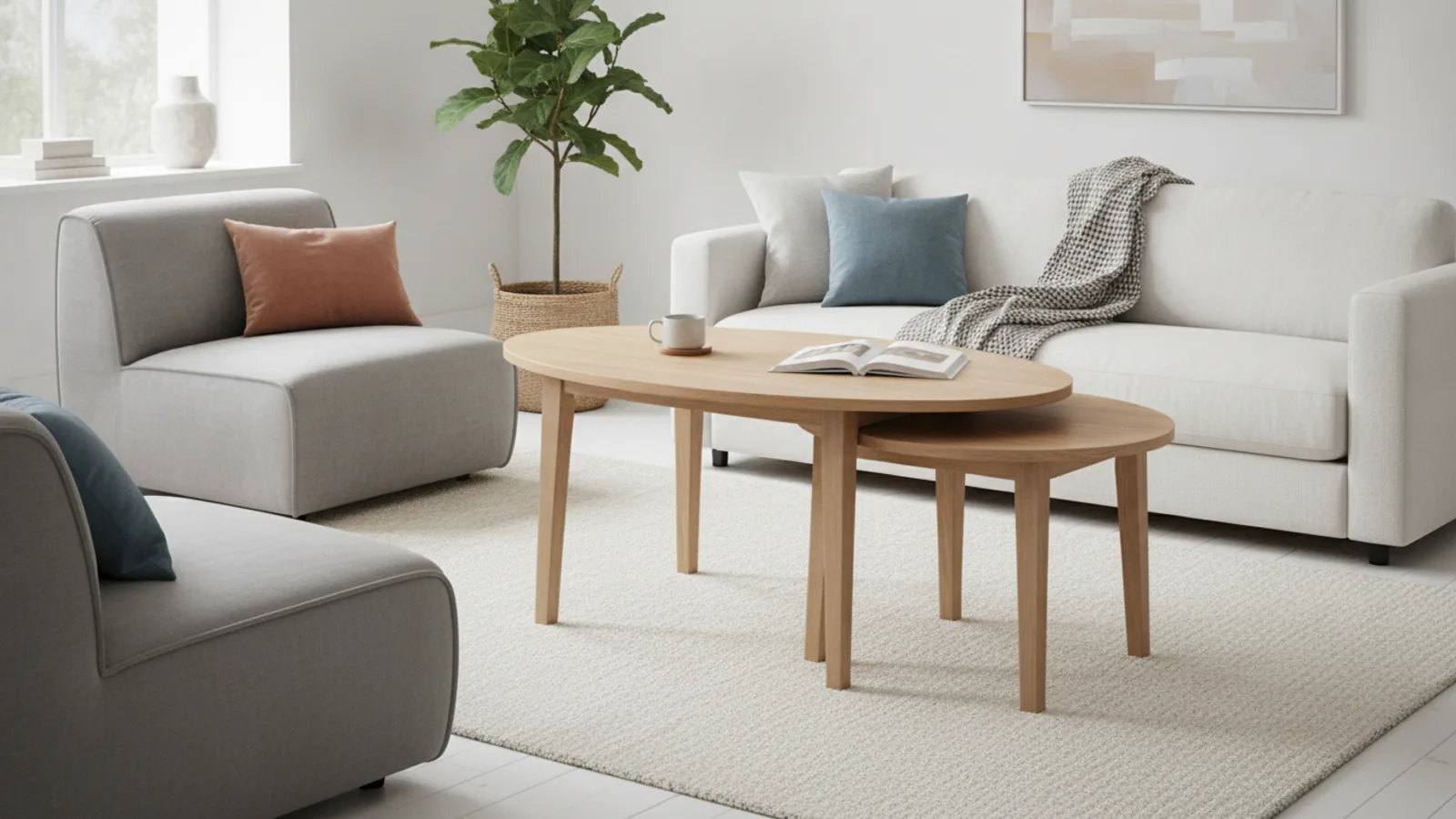
Nesting tables are small tables that slide under or stack with one another, letting you change a room's seating layout in minutes without buying new furniture. Choosing well means matching table height, shape, and material to how you actually host, then testing the movement path and storage spot before you commit. This guide walks you through measuring your space, picking the right configuration, and checking the details that keep flexible seating comfortable and safe over time.
Fast Answer
- Buy nesting tables only after measuring both your storage footprint and your busiest seating arrangement, then test the slide path with a full glass of water on top.
- A set of two or three tables with the same height range and similar finish gives the most flexibility; a single oversized table rarely nests cleanly.
Before You Start
- Measure the open floor area where you plan to seat guests, and write down both the everyday footprint and the expanded layout for gatherings.
- Measure the height of your main sofa, dining chairs, and armchair arms, because nesting tables work best when their tops sit near those surfaces.
- Identify a storage corner, closet, or wall gap where the nested stack will live, and confirm the stack fits with room to pull the front table out.
- Check your floor type and any rugs, noting thresholds, carpet pile, or uneven boards that could catch a table leg during sliding.
Step-by-Step Instructions
Measure seating and storage space
Start by measuring the room where the tables will serve guests, not just the spot where they will sit when not in use. Mark the widest arrangement you realistically need, such as a circle of four chairs plus a drinks table, and note the walkway width people need to pass behind seated guests. Then measure your storage zone, whether that is a corner, a closet, or the gap beside a sofa. Write both numbers down and compare them. The expanded layout tells you the maximum table size you can use, while the storage footprint tells you the maximum nested stack you can keep. If the two numbers conflict, choose the smaller size and plan to use two separate small tables rather than one large table. This check matters because nesting furniture only feels flexible when it stores easily and still leaves room to move.
Match height to your existing seats
Table height decides whether a nesting set feels comfortable or awkward. Measure the seat height of your sofa, dining chairs, and any armchairs you use for gatherings, then measure the table surface you currently use for drinks. A side table for a sofa usually sits close to the seat height, while a table used with dining chairs sits closer to the chair seat plus a small rise. For nesting sets, check the height of every table in the set, because some designs vary the heights so each table peeks out from the one above. Confirm the tallest table matches your main seating, and that the shorter tables still work beside lower seats. If you plan to use the tables on a rug and on bare floor, measure both and account for the difference. This check matters because a table that is too low forces guests to bend, while one that is too high makes drinks awkward to reach.
Choose shape for your layout
Think about the shapes your seating arrangement makes, then pick table shapes that fit inside those shapes. Round and oval tables reduce sharp corners in tight conversation circles and let people slide in from any side. Rectangular tables line up neatly along a sofa or wall and can tuck closer to straight seating. Square tables work well between two chairs but take more floor space than a round table of similar width. For nesting sets, look at how the tables overlap when stored and how much usable surface remains when one is pulled out. If you host both small chats and larger groups, a set with mixed shapes often covers more situations than a set of identical tables. This check matters because the wrong shape wastes floor space and creates traffic jams, even when the size and height are correct.
Test the nesting motion
Before committing to a set, test how each table slides out from the others. Place the nested stack on the floor surface you will actually use, then pull the front table out slowly and push it back. Listen for scraping, watch for wobble, and check whether the smaller table catches on the legs or rails of the larger one. If the set has casters or glides, confirm they roll or slide smoothly in both directions and do not mark the floor. Ask whether one person can manage the motion alone, because guests may move tables without help. Also test the fully extended arrangement with a full cup or glass on top to see how stable it feels at the edge. This check matters because a set that is hard to slide will stay nested, which defeats the purpose of flexible seating.
Evaluate materials and finish
Material affects weight, durability, and how easy the tables are to move. Solid wood feels steady but can be heavy to slide, while metal frames with wood or glass tops are often lighter and easier to reposition. Veneered surfaces resist scratches better than thin laminates, and powder-coated metal handles bumps without chipping as quickly as painted finishes. Consider the room's humidity and sunlight, since some materials expand, fade, or warp over time in those conditions. Run your hand along edges and undersides for rough spots that could snag clothing or skin. Check that feet have protective pads or glides so they will not scratch hard floors. This check matters because heavy or fragile tables get left in one place, while sturdy, manageable tables actually get rearranged as your seating needs change.
Confirm stability and safety details
Stability decides whether a nesting set is safe for daily use. Push gently on each table's edge in several directions and watch for lifting, rocking, or flexing at the joints. Check that legs meet the floor evenly and that any folding or locking mechanism engages firmly. For tables meant to slide under others, confirm the smaller table cannot tip when pulled out beyond its base. Look for rounded edges, recessed hardware, and a base wide enough for the top surface. If children or pets share the room, avoid tall, narrow tables that tip easily and choose wider, lower designs. Finally, read any assembly and care instructions so you know how to tighten fittings and clean the surfaces. This check matters because flexible furniture is moved often, and frequent handling exposes weak joints faster than a fixed table ever would.
Quick Reference
| Situation | Action | Why it helps |
|---|---|---|
| You host both small everyday meals and larger weekend gatherings. | Choose a set of two or three nesting tables with matched heights and mixed shapes, and store them nested beside the main seating so one table can be pulled out for daily use and the full set for guests. | A varied set covers more layouts than one large table, and keeping it close to the seating area means you will actually rearrange it instead of leaving it stored away. |
| Your floor is thick carpet or has uneven boards. | Test each table's slide on that exact surface before buying, and look for glides or casters rated for carpet, or plan to add a thin protective mat under the nested stack to smooth the movement. | Carpet pile and uneven floors increase drag and wobble, so a set that slides easily in a showroom may catch or tip at home, turning a flexible choice into a frustrating one. |
| You have limited storage space and a narrow walkway. | Measure the nested stack footprint and the walkway clearance together, and select the smallest set that still matches your seat heights, even if that means two tables instead of three. | A stack that blocks a walkway or does not fit its storage spot will be left out permanently, so the smallest usable set preserves both traffic flow and the flexibility you wanted. |
Common Issues
- The nested tables wobble or rock when pulled out.: Check that all legs and glides sit flat on the floor and that any assembly bolts are snug. If the floor is uneven, add a felt or rubber pad under the short leg, or move the set to a flatter area. Recheck after tightening, and stop using the table if the wobble continues.
- The tables are too heavy or awkward to move alone.: Shift to a lighter frame or a smaller top size, or add smooth glides to reduce drag. Practice the slide motion with one hand free before relying on the set during a gathering, and store the tables near the seating area so moves stay short.
- The finish scratches or marks easily from sliding.: Apply protective pads to every foot and lift rather than drag when moving tables across hard floors. Keep a soft cloth nearby for wiping grit off the floor, since small particles cause most scratches, and use coasters to protect the tabletop surface.
Advanced Tips
- Create a floor plan with removable tape showing each arrangement you use most, so you can compare table sizes against real seating positions before buying.
- Choose a nesting set with a consistent finish and leg style, because mixed finishes look cluttered when the tables are pulled apart and used separately.
- Rotate which table sits at the front of the nested stack to spread wear evenly and keep the slide motion smooth over months of use.
Final Checklist
- Measured both the expanded seating layout and the nested storage footprint, and confirmed the set fits both.
- Checked every table height against your sofa, chairs, and armchairs, and tested comfort at that height.
- Slid each table in and out on your actual floor surface and confirmed smooth, stable movement.
- Inspected stability, edge safety, foot pads, and assembly fittings before placing the set in daily use.
FAQ
How many nesting tables do I really need?
Most households do well with two or three tables. Two cover a small sofa setup and a guest pair, while three give you a low, medium, and tall option for mixed seating. More than three rarely gets used and takes more storage space, so start small and add only if you repeatedly run out of surfaces.
Can nesting tables replace a coffee table?
They can serve a similar role, but they behave differently. A coffee table offers one large fixed surface, while nesting tables give you several smaller surfaces you can spread out or tuck away. If you often need a wide, low surface for games or full meals, keep a coffee table and use nesting tables as flexible side surfaces instead.
What should I check before buying a set online?
Confirm the height of every table, the nested stack dimensions, the weight of each piece, and the materials and finish. Look for images or descriptions of the underside and feet, and read the assembly and care instructions. If key details are missing, ask the seller directly before ordering, since sizes and finishes vary between sets.