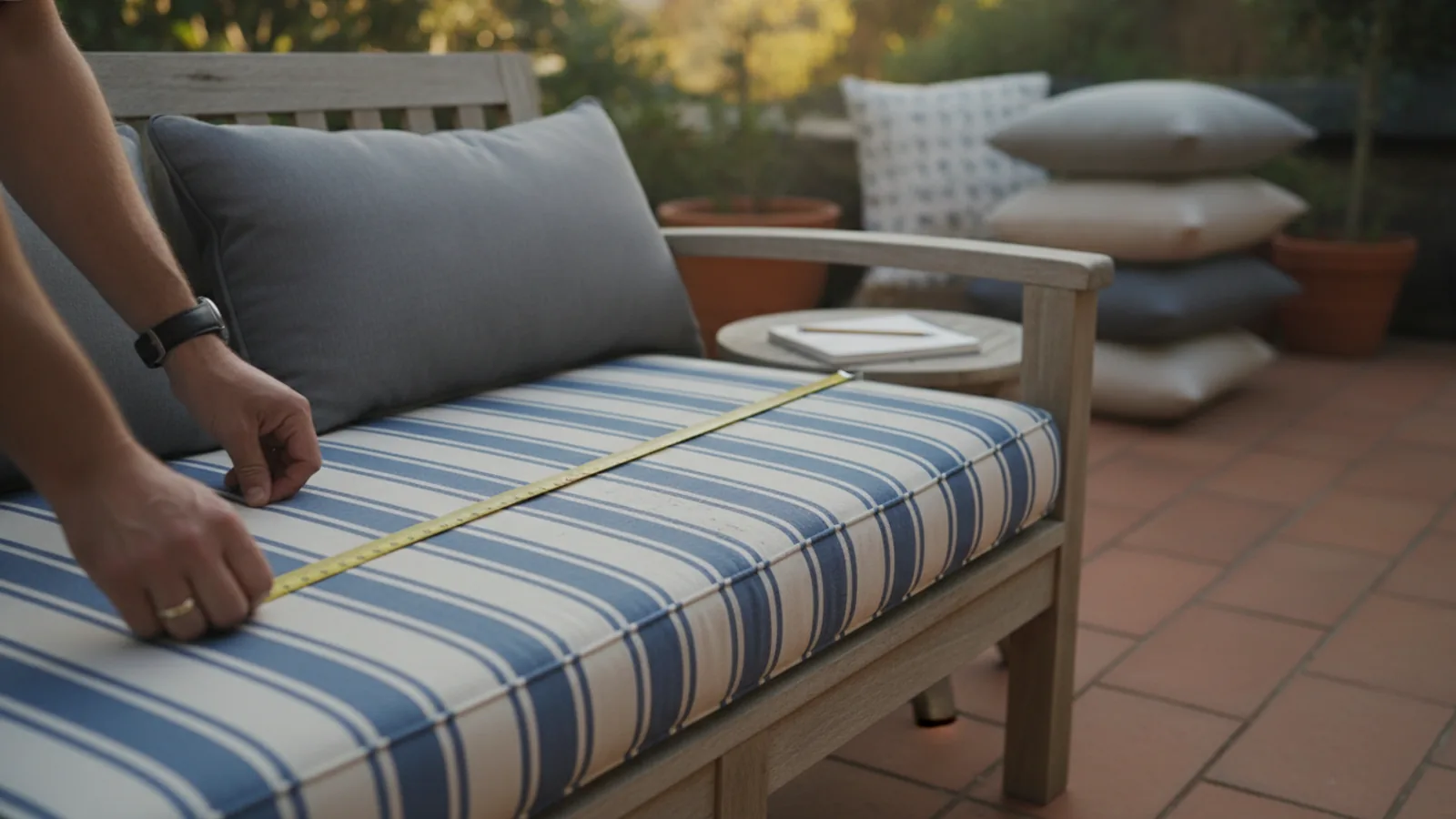
How To Measure A Window For Ready Made Curtains
A practical step-by-step guide to how to measure a window for ready made curtains, including preparation, instructions, common issues, tips, and next steps.
How To Measure A Window For Ready Made Curtains
Measuring a window for ready made curtains is a straightforward process that ensures a proper fit and a polished look. By taking accurate width and drop measurements, you can select the right curtain size from standard options. This guide walks you through each step, from choosing your curtain track or pole to recording final numbers, so you can hang curtains that enhance your room without the need for custom alterations.
Fast Answer
- Measure the width of your curtain track or pole, not the window itself, to determine the curtain width you need.
- Measure the drop from the top of the track or pole to your desired finished length, such as sill, below sill, or floor.
Before You Start
- Gather a metal tape measure, a step stool or ladder, a pencil, and paper or a notes app to record your measurements.
- Decide whether you will use a curtain track or a curtain pole, as this affects where you take your measurements.
- Determine your desired curtain drop: sill length, below sill, or floor length, and note any radiators or furniture in the way.
- Check the packaging or product details of the ready made curtains you plan to buy to confirm the size range and header type available.
Step-by-Step Instructions
Set Up Your Measuring Tools
Start by gathering all the tools you need so you can measure without interruption. You will need a metal tape measure because it stays rigid and gives accurate readings, a step stool or ladder to reach the top of the track or pole safely, a pencil, and paper or a notes app to write down numbers. Clear the area around the window by moving furniture or ornaments that might block your view or cause you to trip. If you are replacing existing curtains, take them down first so you can see the track or pole clearly. Before you begin, check that your tape measure is in good condition and that the numbers are easy to read. A practical check is to extend the tape and let it retract to ensure it works smoothly. This matters because a faulty tape can give inconsistent measurements, leading to curtains that are too short or too narrow. Taking a moment to prepare saves time and prevents mistakes later.
Decide on Your Curtain Track or Pole
The type of curtain hardware you use determines where you measure. If you already have a track or pole installed, you will measure that. If you are installing new hardware, decide first whether you want a track, which is often used for pleated curtains and can be ceiling or wall mounted, or a pole, which is more decorative and usually wall mounted. For a track, measure the full length of the track from end to end, including any returns or overlaps. For a pole, measure the length of the pole between the finials, but exclude the decorative ends. Also, note the height of the track or pole from the floor or ceiling. This step is important because ready made curtains are sold in specific widths and drops that correspond to common track and pole sizes. If you plan to change your hardware, do that before measuring so your numbers match the final setup.
Measure the Width for Curtain Coverage
Measure the width of your track or pole, not the window. For a track, extend your tape measure from one end of the track to the other, including any overlap arms or returns. For a pole, measure from the base of one finial to the base of the other, or simply the length of the pole excluding the decorative ends. Write this number down as your track or pole width. Ready made curtains are often sold with a stated width that refers to the flat width of one panel. To get a good look, the total width of all curtains should be at least twice the track or pole width for fullness. If you want a luxurious, heavily gathered look, aim for two and a half times. A practical check is to compare your measured width to the size options available. If your width falls between sizes, choose the next size up to ensure adequate coverage and avoid gaps.
Measure the Drop for Length
The drop is the finished length of your curtains. Measure from the top of the track or pole to where you want the curtains to end. If you have a track, measure from the top of the track. If you have a pole, measure from the bottom of the rings or the top of the pole, depending on how the curtains will hang. For example, if the curtains attach with rings below the pole, measure from the bottom of the ring. Common drop lengths are sill length, which ends just above the windowsill, below sill, which ends 10 to 15 centimeters below the sill, and floor length, which just touches the floor or breaks slightly. Use a pencil to mark your desired length on the wall or tape a small piece of paper at that height. A practical check is to measure at three points: left, center, and right, because floors and ceilings can be uneven. Use the smallest measurement to ensure the curtains do not drag.
Record and Round Your Measurements
Write down your width and drop measurements clearly. Use the same units, either centimeters or inches, and be consistent. If you measured in inches, note fractions as decimals for easier comparison. For width, round up to the nearest available size to ensure full coverage. For drop, round down slightly if you want to avoid puddling, but consider that ready made curtains come in fixed drops such as 137 cm, 183 cm, or 229 cm. Compare your measurements to the standard sizes offered. If your drop is between sizes, choose the longer drop if you prefer a relaxed look, or the shorter drop if you want a neat finish. A practical check is to re-measure both width and drop a second time to confirm. This matters because a small error can mean curtains that are noticeably too short or too narrow. Keep your notes safe until you purchase.
Double-Check for Obstacles and Allowances
Before you finalize your measurements, check for anything that might affect how the curtains hang. Look for radiators, furniture, window handles, or air vents that could interfere. If a radiator sits below the window, you may want sill-length curtains so they do not block heat. If you have a deep windowsill, curtains might need to be outside-mounted to clear it. Also, consider the stack: when curtains are open, they bunch up at the sides. Ensure you have enough wall space on each side for the curtains to stack without covering too much of the window. For tracks, check if you need extra brackets or returns. A practical check is to hold a tape measure at the proposed stack position to see if it overlaps with anything. This step matters because even perfectly measured curtains can look wrong if they cannot open fully or if they block a radiator. Adjust your width or drop accordingly, and note any changes.
Quick Reference
| Situation | Action | Why it helps |
|---|---|---|
| You have a curtain pole with rings and want to measure the drop. | Measure from the bottom of the ring to your desired finished length, not from the top of the pole. | This is because the curtain hangs from the ring, so the drop from the ring will match the actual hanging length. |
| Your window is very wide and ready made curtains come in fixed widths. | Buy multiple pairs of curtains and join them, or choose a wider size if available, to achieve at least double the track or pole width. | This ensures the curtains have enough fullness and can close fully without stretching flat. |
| You are unsure whether to measure in inches or centimeters. | Check the product listing for the units used, and convert your measurements if needed using a reliable conversion method. | This avoids ordering the wrong size due to unit mismatch, which is a common mistake. |
Common Issues
- Curtains are too short and do not reach the floor as intended.: Re-measure the drop from the top of the track or pole to the floor, and check if you measured from the correct starting point. If you measured from the top of a pole instead of the ring, the drop will be shorter. Choose a longer drop size or adjust your curtain rod height if possible.
- Curtains do not meet in the middle when closed.: This usually means the total curtain width is less than double the track or pole width. Measure the track or pole width again and ensure the combined width of your curtains is at least twice that number. If not, return the curtains and buy a larger size or add an extra panel.
- Curtains cover the window but leave gaps at the sides.: Extend your track or pole beyond the window frame by at least 15 to 20 centimeters on each side. If you cannot move the hardware, choose a wider curtain size and allow more stack. Alternatively, use a return on a track to bring the curtains back to the wall.
Advanced Tips
- For patterned curtains, you may need extra width to match the pattern across panels, so consider buying an additional panel to allow for pattern repeat.
- If your floor or ceiling is uneven, measure the drop at multiple points and use the shortest measurement for floor-length curtains to avoid dragging.
- For a professional look with pencil pleat tape, measure the track or pole width and multiply by 2.5 for a luxurious fullness rather than the standard 2 times.
Final Checklist
- Confirm you measured the track or pole width, not the window width, and that your total curtain width is at least twice that number.
- Verify the drop measurement is from the correct starting point (top of track, bottom of ring, etc.) to your desired finished length.
- Check for obstacles such as radiators or furniture that may require a shorter drop or different mounting position.
- Double-check your measurements against the product size chart before purchasing, and keep a record of your numbers.
FAQ
Should I measure the window or the curtain track?
Measure the curtain track or pole, not the window. The curtains need to cover the track or pole and allow for stacking when open. If you measure only the window, your curtains may be too narrow and leave gaps at the sides, and they may not close properly in the middle.
How do I measure for floor-length curtains?
Measure from the top of the track or bottom of the ring to the floor. Then subtract about one centimeter to prevent the curtains from dragging and fraying. Measure at several points because floors can be uneven, and use the shortest measurement to ensure the curtains do not touch the floor.
What if my measurements fall between ready made sizes?
For width, always round up to the next size to ensure full coverage and adequate fullness. For drop, decide whether you prefer a shorter, neater look or a longer, relaxed look. If you want floor-length curtains, choose the longer drop if it is close; otherwise, choose the shorter drop. Check the return policy before buying.