How To Choose A Rug Underlay For Your Floor Finish
A practical step-by-step guide to how to choose a rug underlay for your floor finish, including preparation, instructions, common issues, tips, and next steps.
How To Choose A Rug Underlay For Your Floor Finish
A rug underlay is the hidden layer that keeps a rug flat, quiet, and safe while protecting the floor beneath it. The right choice depends on your floor finish, since hardwood, laminate, tile, vinyl, and carpet each grip, breathe, and wear differently. This guide walks you through measuring, matching material to surface, testing grip and cushion, and checking the result over time so your rug stays put without trapping moisture or staining the floor.
Fast Answer
- Match the underlay to your floor finish first: use a breathable, non-staining pad on hardwood or vinyl, and a thin, high-friction pad on tile or laminate.
- Choose thickness by use: thin pads suit doors and rolling chairs, while thicker cushion suits living areas where comfort matters more than clearance.
Before You Start
- Measure the rug and the floor area it will cover, then note the exact width and length so the underlay can be trimmed with a clean margin rather than guessed at the store.
- Identify your floor finish and its finish type, such as sealed hardwood, laminate, luxury vinyl, ceramic tile, or wall-to-wall carpet, because each surface grips and breathes differently.
- Check the rug backing material and construction, including whether it is woven, tufted, or backed with latex or canvas, since the underlay must pair with it without slipping or reacting.
- Gather a tape measure, scissors or a utility knife, a straightedge, and a pencil, then clear the area so you can lay the underlay flat without furniture in the way.
Step-by-Step Instructions
Measure the rug and the room
Start by measuring the rug itself, not the space you wish it filled. Record the exact length and width in the room where it will sit, because rugs can relax or stretch slightly once unrolled. Then measure the clear floor area around it, including door swings and furniture legs, so the underlay does not peek out or block a threshold. A practical check is to lay the rug flat for a day and re-measure after it settles; rugs often shift a little when they lose their roll memory. This matters because an underlay cut too large will wrinkle underfoot and lift at the edges, while one cut too small lets the rug slide and curl. Write both numbers down and keep them with you when you shop or order, since comparing sizes is far easier than returning an opened roll.
Identify your floor finish
Look closely at your floor and confirm what it is made of. Sealed hardwood, engineered wood, laminate, luxury vinyl plank, ceramic tile, and carpet each behave differently under a rug pad. A simple check is to place a few drops of water on an inconspicuous spot and see whether it beads or soaks in; sealing generally makes water bead, while untreated wood darkens. You can also check the original installation paperwork or ask your building manager if you rent. This step matters because the wrong pad can trap moisture against a finish, dull a surface, or leave a sticky residue that is difficult to remove. Note whether the floor is smooth or textured, since texture changes how much friction a pad needs to hold the rug in place. Keep this note with your measurements so the two decisions stay connected.
Choose the pad material
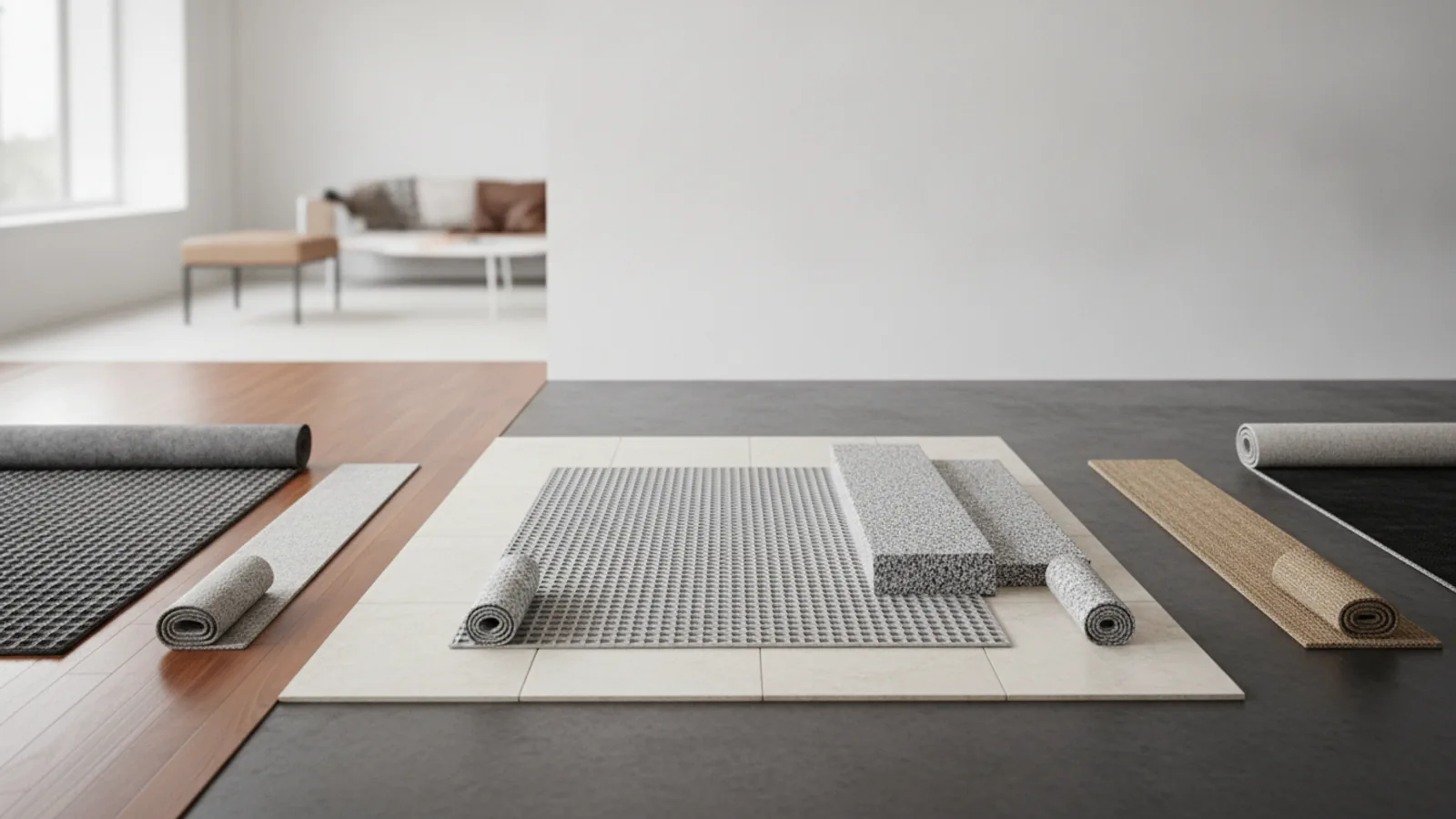
Select a material that matches your floor finish rather than the rug alone. For sealed hardwood and vinyl, choose a breathable pad with a felt or felt-and-rubber blend so air can move and moisture will not be trapped. For laminate, a thin rubber or polymer pad with a textured grip works well because it holds without adding much height. For tile, a denser rubber pad resists sliding on grout lines and uneven surfaces. For carpet, a firm pad with a rough underside grips the carpet fibers and stops the rug from creeping. A practical check is to press a sample against the floor and try to push it sideways; if it slides easily, it will not hold the rug. This matters because grip and breathability are separate jobs, and one pad rarely does both perfectly. Tell the seller your floor type and ask what they recommend for it.
Match thickness to use
Thickness changes how the rug feels, how doors clear it, and how furniture sits. A thin pad, roughly one to two tenths of an inch, suits entryways, under rolling chairs, and beneath doors that already clear the floor by a small margin. A medium pad adds cushion for living rooms and bedrooms without making the rug spongy. A thick pad suits areas where comfort matters and no door needs to swing over it. A practical check is to stack the rug and pad together in a doorway and open the door slowly; if it drags, reduce the thickness. This matters because a pad that is too thick creates a trip edge and can stress chair casters. Measure the gap under your lowest door before you commit, and remember that cushion and stability trade off against each other.
Trim and fit the underlay
Unroll the underlay and let it relax flat for a few hours, because rolls often keep a curve that shows through the rug. Place it under the rug, centered, and trim it so it sits about an inch inside the rug edge on all sides. Use a straightedge and sharp scissors or a utility knife, cutting on a protected surface and keeping the line steady. Cut corners slightly rounded so they do not poke through the rug. A practical check is to lift one corner of the rug and confirm the pad does not extend beyond it anywhere. This matters because an exposed pad edge catches feet, collects dust, and can curl the rug border upward. Work slowly and re-check the fit before trimming more, since you cannot add material back. When finished, smooth the pad flat and remove any trimmings.
Test grip and moisture
After fitting, walk across the rug from several angles and push it sideways with your foot. It should resist sliding without feeling glued down. Lift a corner after a day or two and check the floor underneath for condensation, discoloration, or a damp feeling. On wood and vinyl, a dry, clean surface is the goal. If you find moisture, remove the pad, let everything dry, and switch to a more breathable option. A practical check is to place a small square of the pad under a heavy object for a week and inspect the floor afterward. This matters because most floor damage from rugs happens slowly and silently under the pad, not on top where you can see it. Record what you find so you can adjust before the problem spreads.
Quick Reference
| Situation | Action | Why it helps |
|---|---|---|
| Your rug sits on sealed hardwood and slides near doorways. | Choose a breathable felt-and-rubber pad, trim it an inch inside the rug edge, and press it flat before walking on it for a day. | Sealed hardwood needs air movement to avoid trapped moisture, while the rubber grip stops the rug from creeping at high-traffic edges. |
| Your rug covers ceramic tile with visible grout lines. | Use a denser rubber pad with a textured underside so it grips the grout pattern and resists sliding across the uneven surface. | Tile is hard and often slightly uneven, so friction and density matter more than softness for keeping the rug in place. |
| Your rug lies over wall-to-wall carpet in a bedroom. | Pick a firm pad with a rough underside made to grip carpet fibers, and keep it thin so the rug does not float or ripple. | A pad designed for hard floors can slide on carpet, while a carpet-specific pad grabs the fibers and holds the rug steady. |
Common Issues
- The rug still slides after adding a pad.: Lift the rug, clean both surfaces of dust, and confirm the pad is not larger than the rug. If it still moves, switch to a pad with a higher-friction underside suited to your exact floor finish, and press it down firmly before walking on it.
- A damp patch or dark mark appears under the pad.: Remove the pad immediately, dry the rug and floor fully, and inspect the finish. Replace a non-breathable pad with a breathable felt or felt-and-rubber option, and check again after humid weather to confirm the problem does not return.
- The rug buckles or a door drags over it.: Reduce the pad thickness or trim it narrower so it stays well inside the rug edge, then test the door swing again. Rounded corners and a flat, relaxed pad prevent the ripples and trip edges that cause buckling.
Advanced Tips
- For rooms with rolling chairs, place a thin, firm pad under the rug and check that casters do not sink or leave dents after a week of use.
- If your floor finish is delicate or newly restored, test a small offcut of the pad underneath a heavy object for several days before covering the whole area.
- In humid climates, rotate the rug and pad a quarter turn each season so any moisture exposure and wear are spread evenly across the floor.
Final Checklist
- The underlay sits fully inside the rug edge on every side with no exposed pad corners.
- The rug resists sliding when pushed from several angles, including doorways and seating areas.
- The floor under a lifted corner is dry, clean, and free of new discoloration or marks.
- Doors clear the rug without dragging, and the pad thickness suits the room's main use.
FAQ
Do I always need a rug underlay?
Not always, but most rugs benefit from one. An underlay adds grip, cushion, and a buffer between the rug and the floor. On smooth surfaces such as sealed hardwood or vinyl, a pad mainly prevents sliding and protects the finish. On carpet, it reduces creeping and wrinkling. If a rug already has a sturdy, high-friction backing and never moves, you may skip it, but check the floor underneath for moisture and wear anyway.
Can a rug pad damage my floor?
A pad can damage a floor if it traps moisture or reacts with the finish. Rubber and vinyl pads can leave marks on some surfaces, especially when the floor is damp or newly finished. That is why breathable felt or felt-and-rubber pads are often safer on wood and vinyl. Always check the floor under a lifted corner after a few days, and stop using a pad if you see discoloration or a damp feeling.
How do I choose thickness for a rug under furniture?
Match thickness to clearance and use. Measure the gap under the lowest door and choose a pad that keeps the rug below it. For chairs with casters, use a thin, firm pad so wheels do not sink. For living areas where comfort matters, a medium pad works well. Test by stacking the rug and pad in place, then opening the door and rolling a chair across it before you commit.